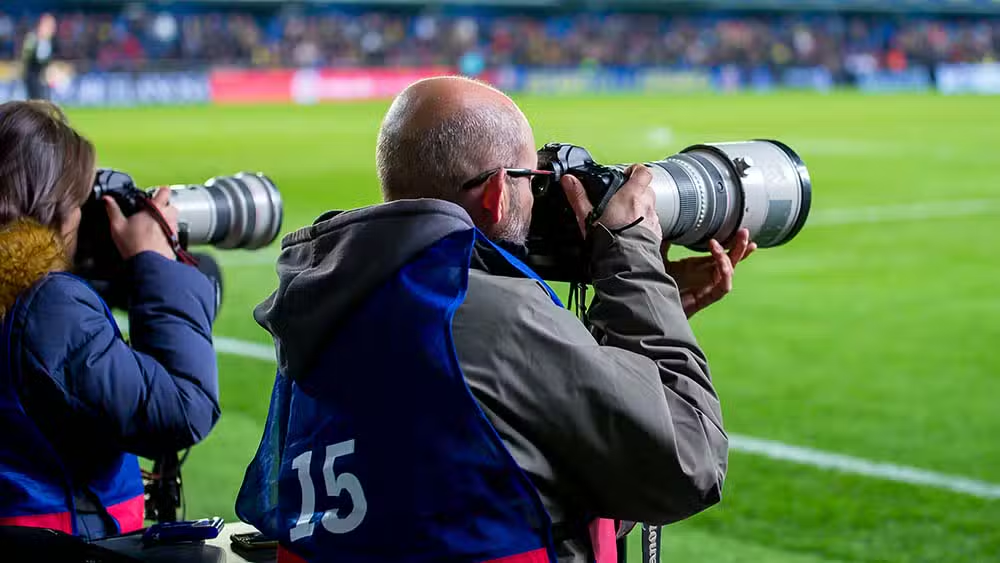
Learning how to become a sports photographer can lead to a career spent close to the action, from high school and college games to professional sports and major events.
There is no set route into sports photography. Some photographers come in through school, while others get started by covering local games and building experience from there. What matters most is being able to show that you can handle a camera well and produce strong work in real sports settings.
This guide covers what sports photographers do, the skills and experience you will need, and the steps that can help you turn an interest in sports photography into paid work.
What Does a Sports Photographer Do?
A sports photographer captures the action, people, and moments that tell the story of a sporting event. The job goes beyond taking pictures during a game. Photographers often prepare before the event, make fast decisions while it is happening, and spend time selecting and editing their strongest images afterward.
Common parts of the job include:
- Capturing live action. Sports photographers need to follow fast-moving plays and react quickly enough to photograph key moments such as goals, tackles, catches, celebrations, and finishes.
- Photographing the story around the game. Some of the strongest photos happen away from the main play. Coaches talking with players, fans reacting, athletes preparing, and post-game celebrations can all help show what the event felt like.
- Editing and delivering photos. After shooting, photographers sort through their images, make edits in programs such as Adobe Lightroom or Photoshop, add information when required, and send finished photos to editors, teams, or clients.
- Planning for each event. Photographers may need credentials, shooting access, equipment checks, and a plan for where they can work inside a venue.
- Working with other sports professionals. Depending on the role, a photographer may coordinate with editors, writers, social media teams, athletic departments, or marketing staff.
Knowing the sport also makes a difference. If you know where the action is likely to move next, you can position yourself before the moment happens instead of reacting after it is already over.
A Day in the Life
Game day usually starts long before the action does. Photographers may arrive early to look over the venue, get their gear ready, test camera settings, and figure out where they can get the best angles once the game starts.
During the event, much of the job comes down to a few key responsibilities:
- Prepare for changing conditions. An outdoor game might start in bright sunlight and end under stadium lights. An indoor venue may have difficult lighting from the beginning. Photographers need to adjust camera settings without losing track of the action.
- Follow the game instead of chasing random shots. Knowing the rules, players, and flow of the sport helps you anticipate where the next important moment may happen.
- Capture more than the obvious play. A winning goal matters, but so does the reaction afterward. Photographers often look for emotion, interaction between teammates, coaches on the sideline, and other moments that add context.
- Work quickly after the event. Depending on the assignment, a photographer may need to review hundreds of images and send a small group of edited photos to the editor or columnist shortly after the game ends.
That mix of preparation, shooting, and editing means the job continues after the final score.
Where Sports Photographers Work
Sports photographers can end up working in a lot of different settings. Some stay with one team, school, or publication, while others take assignments from several organizations throughout the year.
You might find work with:
- Professional and minor league teams
- College athletic departments
- Newspapers and sports publications
- Sports websites and digital media companies
- Photography and news agencies
- Youth sports organizations
- Sporting event companies
- Brands and sponsors
- Stock photography agencies
Independent work is also common. The Bureau of Labor Statistics reported that 67% of photographers were self-employed in 2025.
If you want to explore these career settings in more detail, the Jobs In Sports guide to Sports Photography Jobs covers several places where photographers can find work.
Do You Need a Sports Photography Degree?
A college degree is not required to become a sports photographer. The Bureau of Labor Statistics lists a high school diploma or equivalent as the typical entry-level education for photographers.
Still, studying photography, journalism, visual communications, digital media, or a related subject can help you develop technical skills and gain access to school publications and athletic events.
Certificates, community college courses, workshops, and independent practice are also possible paths.
For most photographers, the portfolio becomes one of the most important parts of the job search. Employers and clients want to see whether you can consistently capture strong sports images and work in real event conditions.
How to Become a Sports Photographer: 6 Steps to Get Started

Most sports photographers do not land a major job right away. They usually start by shooting smaller events, meeting people in the industry, and building enough experience to move into better assignments over time.
These six steps can help you start building that experience.
1. Learn the Fundamentals and Get the Right Gear
Start by learning how your camera works before worrying about professional events.
You should be comfortable with shutter speed, aperture, ISO, autofocus, exposure, and continuous shooting. Sports move quickly, so you need to make adjustments without stopping to figure out basic camera controls.
Practice with moving subjects whenever possible. Local games are useful, but you can also photograph runners, cyclists, pets, or friends playing sports.
A basic sports photography setup may include:
- A camera with reliable continuous autofocus
- A telephoto lens
- Extra batteries
- Multiple memory cards
- A monopod for heavier lenses
- A computer for sorting and editing images
- Photo editing software
You do not need the most expensive equipment available when you are starting. Learning how to get strong results from the gear you already have is more useful than buying equipment you are not ready to use.
2. Build a Portfolio Shooting Local and College Games
A strong portfolio gives editors, teams, and potential clients a reason to consider you for an assignment. You can start building one long before you have access to professional sports.
Good places to begin include:
- High school sports. These games can give you regular opportunities to practice different sports and shooting conditions.
- College and club sports. Smaller college programs and club teams may offer useful opportunities, especially if you are already a student.
- Recreational leagues. Adult and youth leagues can help you practice photographing action without the access restrictions found at major events.
- Local tournaments and races. Running events, soccer tournaments, basketball competitions, and similar events can give you a large amount of action to photograph in a single day.
- School publications. Student newspapers, yearbooks, and athletic departments can provide experience working with deadlines and specific photo requests.
Your portfolio should show more than one type of image. Include action, emotion, close-ups, wider scenes, celebrations, and moments that help explain what happened during the event.
Be selective. A portfolio of 20 strong images usually says more about your ability than one filled with every usable photo you have taken.
As your work improves, create a simple online portfolio so you have one link you can send when applying for internships, freelance assignments, or sports photography jobs.
3. Get Hands-On Experience Assisting
There is a big difference between practicing at a local game and working on an actual assignment. Once deadlines, media access, editors, and other people are involved, you start learning how the job really works. Assisting a photographer or interning with a team or publication can give you that kind of experience early on.
A few ways to build that experience include:
- Apply for photography internships. Sports teams, universities, publications, and media companies may need interns to help shoot and organize content.
- Assist another photographer. You may help carry equipment, organize files, prepare gear, or handle smaller assignments while watching how an experienced photographer works.
- Join a student newspaper or athletic department. If you are in school, these can be some of the easiest ways to start covering real games on a regular schedule.
- Work smaller events. Local leagues and community events can teach you how to communicate with organizers, meet deadlines, and deliver photos to a client.
- Help with editing or photo management. Even if you are not the main photographer, working with image selection and editing can show you what editors expect from a finished assignment.
Early work may feel small compared with your long-term goals, but it gives you something much more useful than practice alone: experience working around real deadlines and expectations.
4. Network With Teams, Leagues, and Sports Media
Photography is based on skill, but getting opportunities also depends on people knowing who you are and what kind of work you can produce.
You can begin building those relationships in several ways:
- Introduce yourself at local events. If another photographer is not busy working, a short introduction can help you start meeting people already covering sports in your area.
- Connect with athletic departments. Sports information directors, media staff, and communications teams often work directly with photographers and may know about future opportunities.
- Follow local sports publications. Learn who photographs and edits their coverage, then pay attention to the type of work they publish.
- Share your portfolio instead of sending large batches of photos. A simple message and one portfolio link make it easier for someone to review your work.
- Stay professional after getting an opportunity. Arriving on time, following credential rules, meeting deadlines, and communicating clearly can turn one assignment into future work.
Networking does not mean reaching out to everyone you can find. Building a few good connections with photographers, editors, or team staff can eventually lead to advice, referrals, assisting work, or even paid assignments.
You can also join The Network through Jobs In Sports to connect with people working in different parts of the sports industry.
5. Decide: Freelance or Staff Photographer?
As your portfolio grows, you will eventually need to think about how you want to work. Sports photographers commonly build careers through freelance assignments, staff positions, or a mix of both.
Before choosing a path, it helps to know what each option looks like in practice:
- Freelance photographers usually have more freedom to choose who they work with and which assignments they take. That could mean covering games for different teams, schools, publications, or event companies throughout the year.
- Freelancers also run their own business. That means finding clients, setting rates, sending invoices, maintaining equipment, tracking expenses, and planning for slower periods.
- Staff photography usually gives you a steadier schedule of assignments. You may work for a team, university, publication, agency, or other sports organization.
- A staff role may involve more than covering games. You could also shoot practices, player portraits, team events, marketing photos, and content for social media, depending on what the team needs.
- You do not have to choose one path permanently. Many photographers start with freelance assignments before moving into a staff role, while others leave staff positions later to work independently.
How to become a freelance sports photographer and how to become a photographer for a sports team share many of the same early steps. The main difference is what happens after you have the skills and portfolio to start finding paid work.
6. Apply for Your First Gig
Once you have a portfolio and some real event experience, start applying for opportunities that match your current skill level.
Your first paid assignment does not need to involve a major professional league. Smaller organizations can give you valuable experience while helping you build stronger work.
Look for opportunities with:
- Local newspapers
- High schools and colleges
- Youth sports photography companies
- Minor league teams
- Event photography companies
- Digital sports publications
- Athletic departments
- Marketing agencies
For applications, don’t overcomplicate things. Send a link to your portfolio and briefly mention the experience you already have, whether that is shooting live games, meeting tight deadlines, working with teams, or delivering finished photos to clients.
If your goal is learning how to become a professional sports photographer, these first assignments are an important part of the process. Each one gives you more experience, stronger portfolio material, and another professional contact.
Jobs In Sports can also help you explore current openings and connect with people in the industry.
Freelance vs. Staff Sports Photographer: Which Path Is Right for You?
Freelance and staff photographers often use the same cameras and photography skills, but their day-to-day careers can look very different. One path gives you more independence, while the other may provide greater consistency.
Here is how the two options compare:
Freelance Sports Photographer | Staff Sports Photographer | |
Employment | Self-employed or works with several clients | Works for one main employer |
Assignments | Can choose or pitch for different events and clients | Usually covers events assigned by the employer |
Schedule | May change significantly from week to week | Often more predictable, but still includes nights and weekends |
Income | Can vary depending on assignments and clients | Usually more consistent |
Equipment | Often responsible for buying and maintaining personal gear | Employer may provide some or all equipment |
Business tasks | Handles pricing, contracts, invoices, expenses, and client outreach | Usually has fewer business responsibilities |
Variety | Can work with different teams, publications, and sports | Often works closely with the same organization |
Career fit | Useful for photographers who want independence and are comfortable finding clients | Useful for photographers who prefer consistent work and closer ties to one organization |
Neither option is automatically better for someone starting a sports photography career.
Freelancing can make it easier to accept smaller assignments and build experience with different clients. Staff work can give you consistent access to events and let you become more familiar with one team, publication, or athletic department.
You can also move between the two during your career. Your first choice does not have to be permanent.
How Much Do Sports Photographers Make?

After looking at the different career paths, salary becomes easier to put into context. Sports photography pay can vary because some photographers are full-time employees while others are paid by the event, project, day, or client.
Sports photography pay can vary quite a bit depending on the type of work you do and who you work for. Still, current salary data gives you a general idea of what photographers in the field are earning:
- ZipRecruiter estimates that sports photographers in the U.S. earn around $40,815 per year, which works out to about $19.62 an hour, as of September 2026.
- Looking at photographers more broadly, the U.S. Bureau of Labor Statistics lists a median annual pay of $44,660, based on May 2025 figures.
Several factors can affect sports photography pay:
- Experience and portfolio quality
- Freelance versus staff work
- Location
- Type of employer
- Level of competition being covered
- Number of assignments available
- Ability to photograph, edit, and deliver images quickly
- Additional skills such as video or social media content production
A photographer covering local youth events may have a very different income from someone working full time for a professional team or national publication. Freelance photographers may also see their earnings change from month to month depending on their assignments.
As your portfolio, experience, and professional contacts improve, you may be able to compete for higher-paying assignments or more consistent positions.
Ready to Start Shooting? Your Next Move
A sports photography career usually starts with smaller opportunities. Learn your camera, practice photographing action, build a focused portfolio, and look for chances to work around real sporting events.
From there, internships, assisting work, freelance assignments, and professional relationships can help you move closer to larger jobs. You do not need to begin on an NFL sideline or at an NBA arena. Local sports and college athletics can give you the experience you need to build your skills and show employers what you can do.
If you are ready to start searching for sports photography jobs, create a Jobs In Sports account and join The Network. You can explore opportunities, meet sports industry professionals, and start looking for roles that match the experience you are building.


